Vaccine for Colon Cancer
English
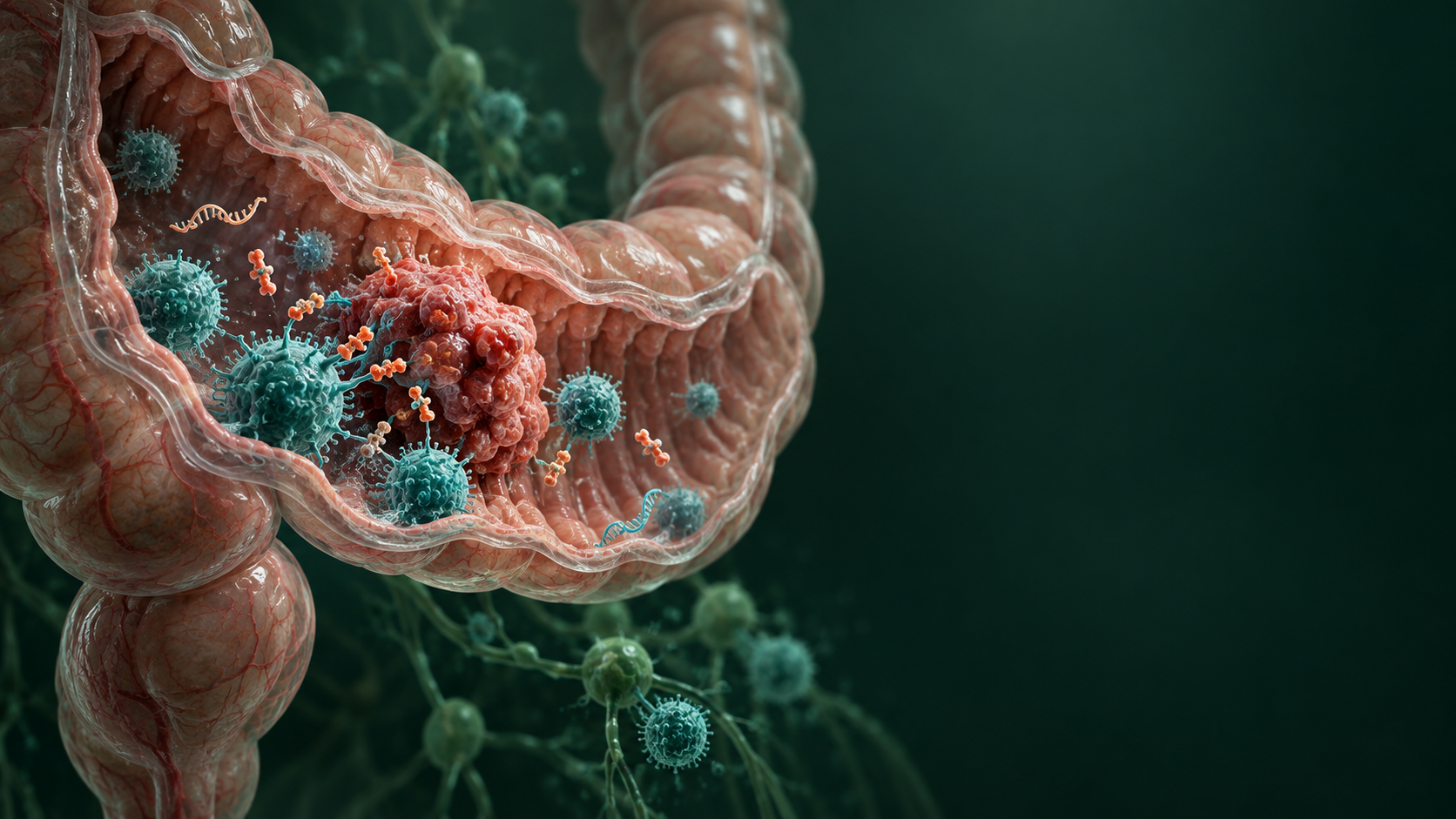
Scientific illustration of a colon tumour and immune cells

Prevention, recurrence and immune treatment

Vaccine for
Colon Cancer

Could vaccination prevent mismatch-repair cancers, eliminate microscopic disease after surgery, or improve immune control of advanced colorectal cancer?

Current positionNo colorectal cancer vaccine is approved. Screening and polyp removal already prevent disease; vaccine strategies remain clinical research.
Not approvedcolon vaccines remain investigational
MSI/dMMRan immune-responsive molecular subgroup
Lyncha major preventive-vaccine research setting
FIT + scopeestablished screening reduces deaths

The evidence landscape

Multiple vaccine strategies, no proven standard yet

Peptide, dendritic-cell, viral-vector, tumour-cell and personalised neoantigen vaccines have been studied across prevention, postoperative and metastatic settings.

Human research

Why mismatch-repair deficiency is attractive

MSI-high or mismatch-repair-deficient tumours accumulate large numbers of mutations and frameshift neoantigens. These abnormal targets can be shared across Lynch-associated cancers or selected for a personalised vaccine.

Checkpoint inhibitors already demonstrate that some MSI-high colorectal cancers can be highly immune responsive. Vaccine studies ask whether immune recognition can be induced earlier, broadened, or sustained after surgery.

Still investigationalAn immunogenic vaccine can generate T cells without preventing recurrence or extending survival. Disease-specific randomized outcomes remain the standard.

Three complementary prevention tools

Vaccines would add to screening, not replace it

Colon cancer offers an unusual opportunity to prevent disease before it is invasive.

01

Find and remove precancer

FIT and other stool tests identify people who may need colonoscopy. Colonoscopy can diagnose cancer and remove adenomatous or serrated polyps before some progress.

NCI screening guide
02

Intercept inherited risk

Lynch syndrome creates predictable mismatch-repair defects and shared frameshift neoantigens. Preventive vaccines are being studied, but regular colonoscopic surveillance remains essential.

NCI vaccine concept
03

Reduce modifiable risk

Avoid tobacco, limit alcohol, maintain activity and a healthy weight, and discuss diet, aspirin and other preventive measures in personal context. No supplement substitutes for screening.

No guarantee: a future vaccine might reduce cancer incidence or recurrence without eliminating risk. Screening, surveillance and symptom assessment would remain necessary.

Colorectal cancer is molecularly diverse

Anatomy, pathology and biomarkers all matter

Colon and rectal cancers overlap biologically but differ in local treatment, radiation use and surgical planning.

Most common

Adenocarcinoma

Most colorectal cancers arise from gland-forming epithelial cells. Right- and left-sided primary tumours differ in mutation patterns, metastatic behaviour and response to some targeted treatments.

Immune-relevant subgroup

MSI-high / dMMR

May arise sporadically or through Lynch syndrome. These tumours can respond strongly to checkpoint immunotherapy and are central to shared-neoantigen vaccine research.

Most common molecular state

Microsatellite-stable / pMMR

Most metastatic colorectal cancers are MSS and generally less responsive to checkpoint monotherapy. Combination vaccine and immune strategies seek to overcome this resistance.

Rare histologies

Neuroendocrine, squamous and other tumours

High-grade neuroendocrine carcinoma, signet-ring, medullary and other uncommon pathologies can behave differently and should not inherit adenocarcinoma evidence automatically.

Inherited syndromes

Lynch, FAP and polyposis conditions

Inherited risk changes the age and frequency of surveillance and affects relatives. Germline counselling and testing should be professionally interpreted.

Universal tumour testing matters. MMR protein immunohistochemistry or MSI testing can guide immunotherapy and help identify possible Lynch syndrome; RAS, BRAF and other markers guide metastatic treatment.

Signs not to ignore

Bleeding and persistent bowel change need assessment

Possible features include visible blood mixed with or coating stool, black stool, iron-deficiency anaemia, persistent change in bowel habit, narrowing of stool with other symptoms, abdominal pain or distension, unexplained weight loss, appetite loss and fatigue.

Screening is for people without symptoms

Substantial bleeding, black tarry stool with weakness or faintness, obstruction, severe worsening pain or persistent vomiting needs urgent assessment. A negative FIT does not safely dismiss significant symptoms.

Treatment context

Vaccination sits beside established multidisciplinary care

Treatment depends on colon versus rectum, stage, resectability, molecular profile, health and patient goals.

Localised disease

Surgery is central. Chemotherapy and, for some rectal cancers, radiation or total neoadjuvant therapy reduce recurrence risk.

MSI-high disease

Checkpoint immunotherapy is established in selected advanced settings and increasingly studied earlier. It is not the same as a vaccine.

Metastatic disease

Systemic therapy, targeted treatment and surgery or ablation of selected metastases may be combined. RAS, BRAF, HER2, MSI/MMR and other results can affect choices.

Clinical trials

Search by setting and biomarker

Include stage, colon versus rectum, MSI/MMR, ctDNA, RAS/BRAF, prior therapy and resection status.

Connected guides

Prevention, immune treatment and preparation

Research tools

Follow the evidence